Building a balanced plate
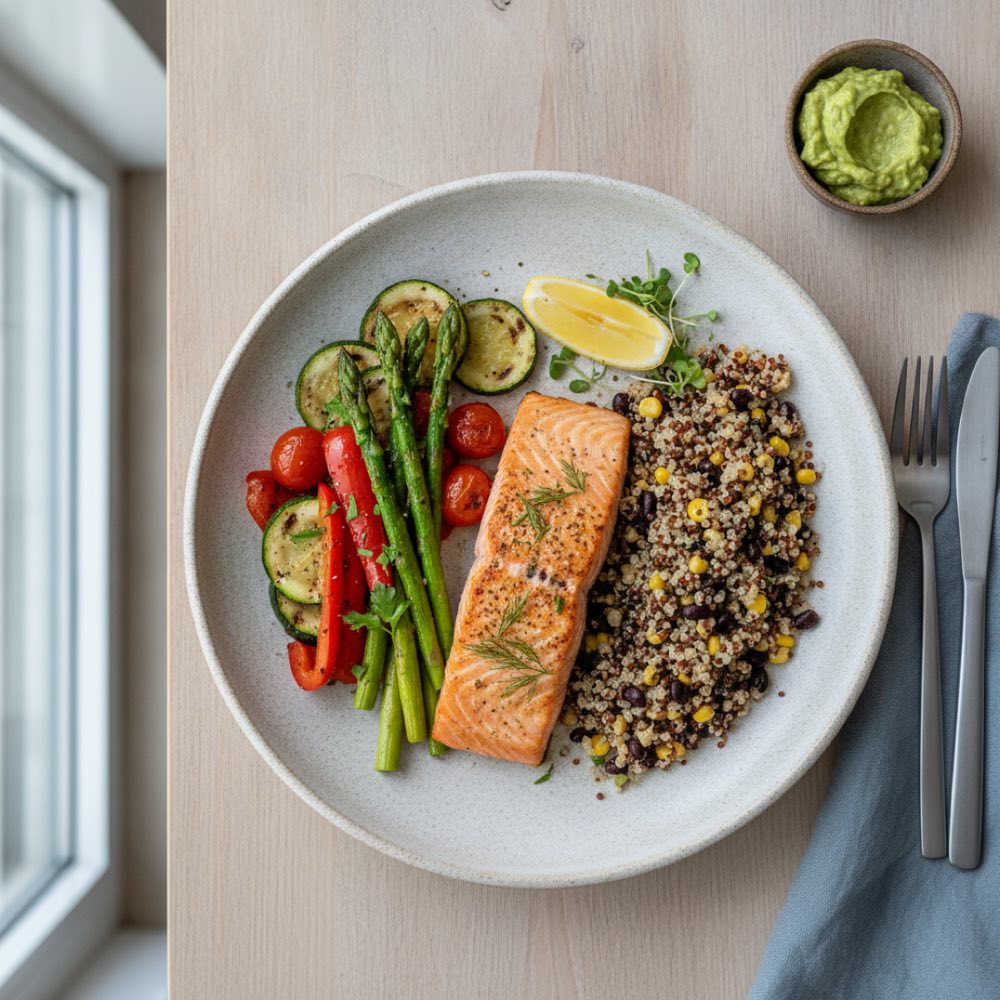
If counting calories makes mealtimes feel like a spreadsheet, there's good news: you don't have to. One of the simplest ways to bring more balance to your eating is to think about your plate as a whole, dividing it into rough proportions rather than tracking every bite. It's visual, forgiving, and surprisingly easy to stick with.
The basic framework
The idea is to picture your plate split into three zones. Fill roughly half with vegetables and fruit, about a quarter with protein, and the remaining quarter with whole grains or starchy foods. No scale required, no math at the table — just a quick glance to see whether the proportions look about right before you start eating.
Why these ratios? Loading up on vegetables adds colour, fibre and volume, so meals feel satisfying without much effort. A solid portion of protein helps a plate feel substantial and keeps you fuller between meals. And a measured serving of grains rounds things out with steady energy. The beauty is that the framework flexes around almost any cuisine you already enjoy.
Easy swaps and building blocks
You don't need special ingredients to make this work — most kitchens already have plenty of options. The trick is simply knowing which foods tend to land in each zone, then mixing and matching based on what you like and what's in season.
- The vegetable half: leafy greens, roasted peppers, tomatoes, carrots, broccoli, a side salad, or a piece of fruit alongside.
- The protein quarter: beans, lentils, eggs, tofu, fish, chicken, or a scoop of Greek yogurt.
- The grain quarter: brown rice, oats, quinoa, whole-grain bread, or a baked potato with the skin on.
Small swaps add up over time. Trading white rice for brown, choosing whole-grain bread, or stirring an extra handful of greens into a pasta dish all nudge the plate toward balance without overhauling the meal you'd already planned to make.
Putting it on the table
Picture a weeknight dinner: half the plate is a tangle of roasted vegetables and a small salad, a quarter is grilled fish or a spoonful of lentil stew, and the last quarter is a scoop of quinoa. At breakfast, the same logic gives you oats topped with berries and a dollop of yogurt — grains, fruit and protein, all in friendly proportion.
If your meals don't fit neatly into a single round plate — think stir-fries, grain bowls or soups — just apply the ratios mentally to the whole bowl. The goal isn't precision; it's a flexible habit you can lean on for years. Start with one meal a day, see how it feels, and let the rest follow naturally.
This article is for general information only and is not medical advice. Always talk to a qualified healthcare professional before making changes to your diet, exercise or health routine.